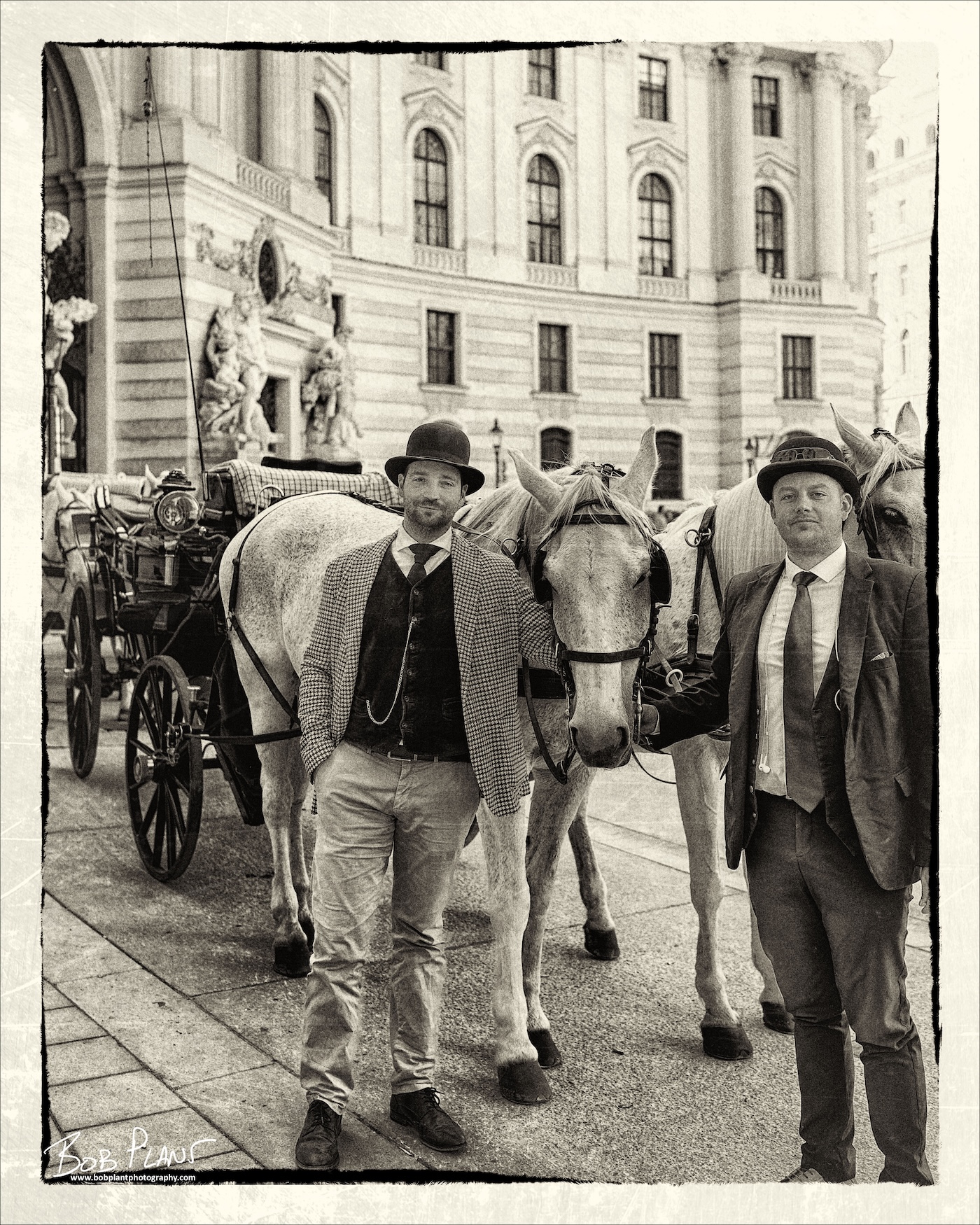
The history of Vienna horse-drawn carriages — from courtly means of transport to cultural goods
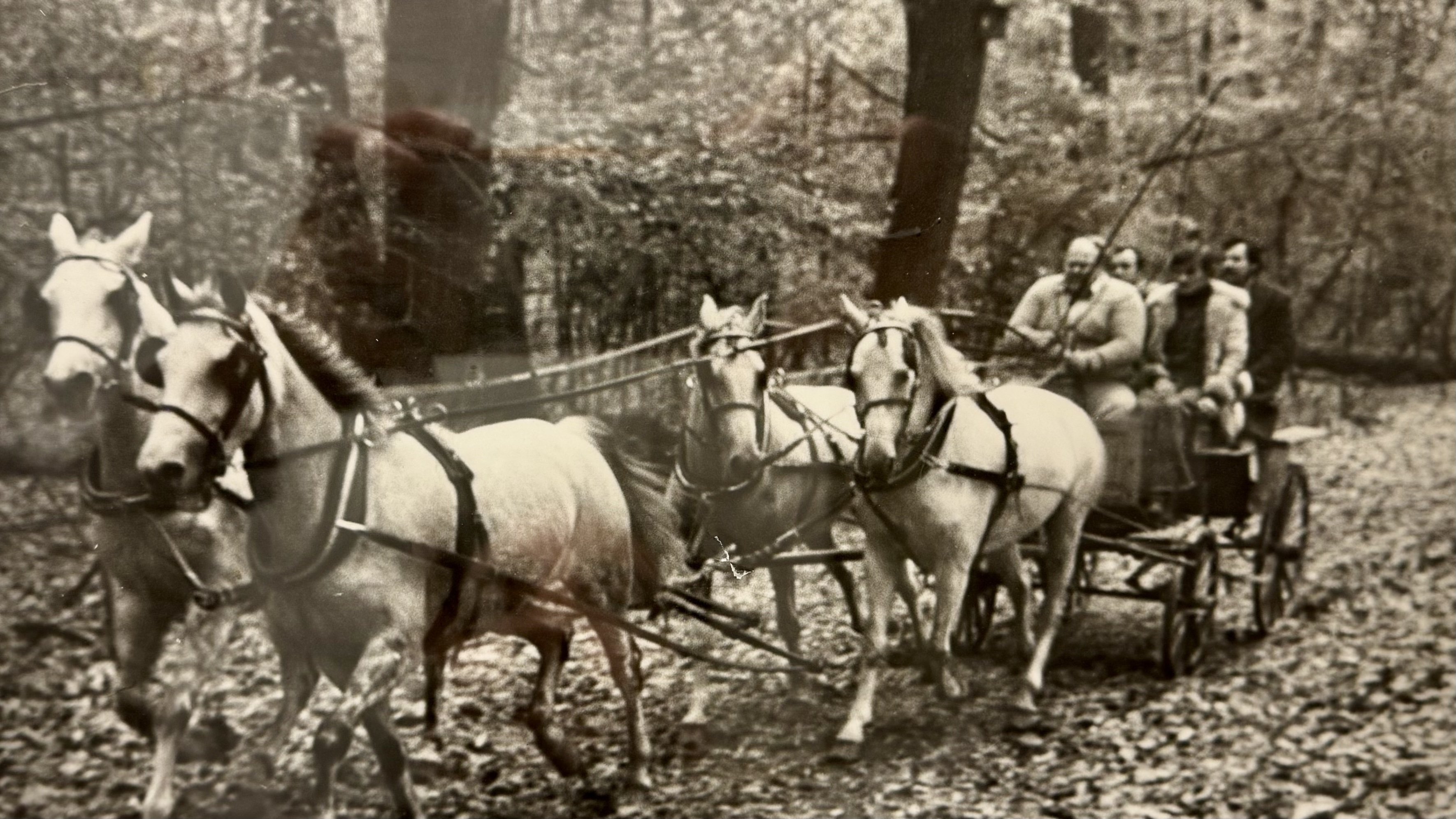
The history of Vienna horse-drawn carriages — from courtly means of transport to cultural goods
The Viennese horse-drawn carriages are one of the city's most famous landmarks and still stand for tradition, elegance and Viennese lifestyle today. Its history dates back several centuries and is closely linked to Vienna's social, cultural and urban development. From practical means of transport to today's tourist attraction, horse-drawn carriages have undergone a remarkable transformation and continue to fascinate or excite people today.
The origin of horse-drawn carriages: Europe in the 17th century
The term “horse-drawn carriage” originally comes from France. In the 17th century, there were rentable horse-drawn carriages in Paris, which got their name from the “Hôtel de Saint Fiacre” inn. From there, the concept of commercial carriage operation spread to many European cities — including Vienna.
The first horse-drawn carriages appeared in Vienna at the end of the 17th century. They played an important role in urban transport, as they offered a flexible and comparatively convenient means of transportation for citizens, merchants and the nobility.
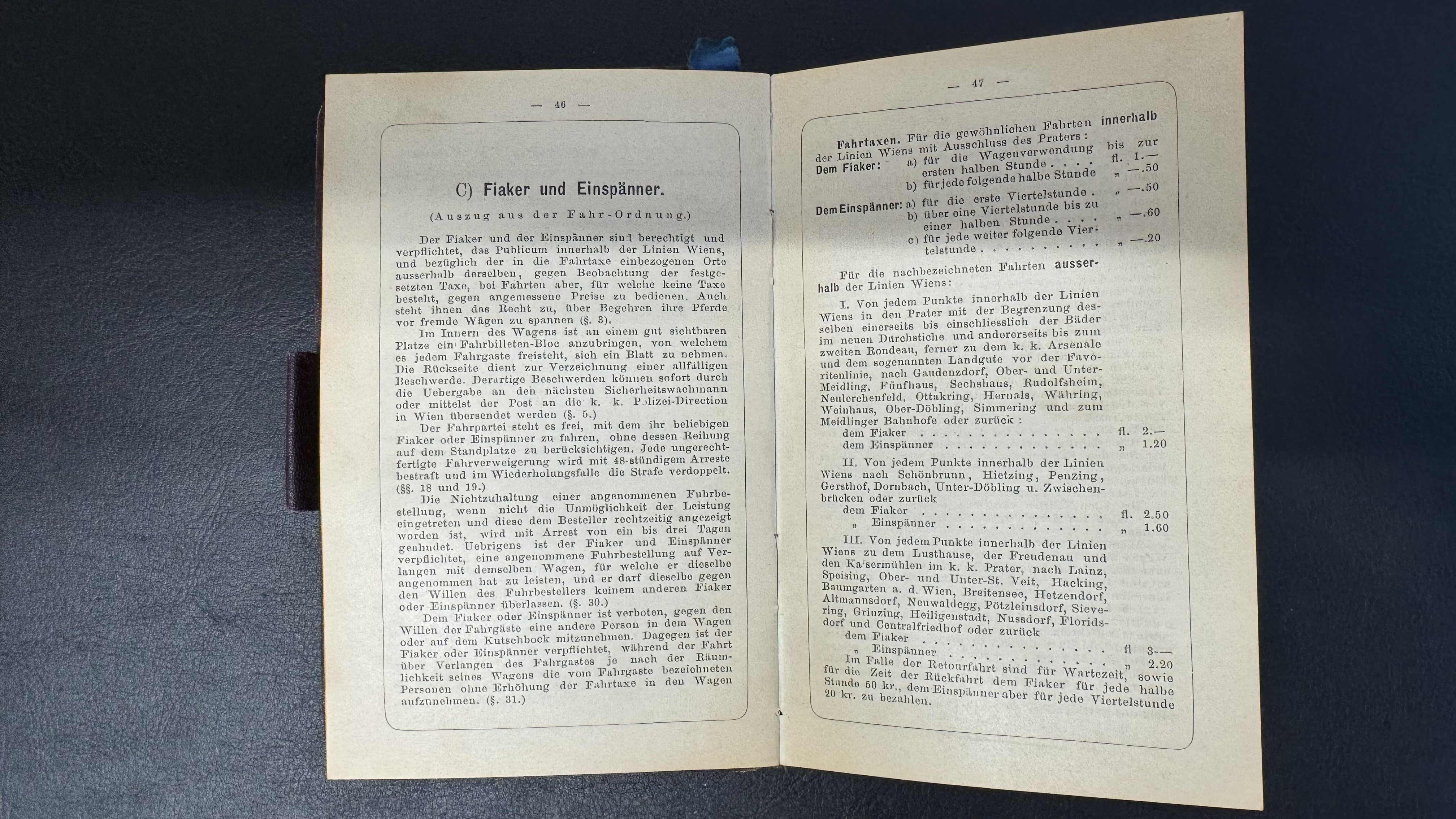
More specifically, we owe the taxi industry to the Viennese horse-drawn carriages, as we still know it today in our modern world. As early as 1693, coachmen were able to purchase linzenen, which entitle them to park with their teams at designated parking spaces and recruit customers. Each carriage was also given a license plate. The legal regulation for prices and tariffs for the respective routes and trips was also considered extremely progressive and new. As early as the end of the 17th century, the city of Vienna was divided into different core zones and the tariffs for the traveled zones were set by law.
This system, which was highly modern at the time, spread from Vienna to all major cities in Europe and then worldwide. The Viennese horse-drawn carriage is therefore regarded as the forefather of the taxi industry, just as it still functions worldwide today.
Fact: It is precisely for the reason mentioned above that the Viennese horse-drawn carriages are still legally part of the taxi industry today and are represented, for example, in a joint guild.
The heyday of Viennese horse-drawn carriages in the 18th and 19th centuries
The Viennese horse-drawn carriages experienced their true heyday in the 18th and especially in the 19th century. With the growth of the city and the social life of the imperial residence of Vienna, horse-drawn carriages became an integral part of everyday life.
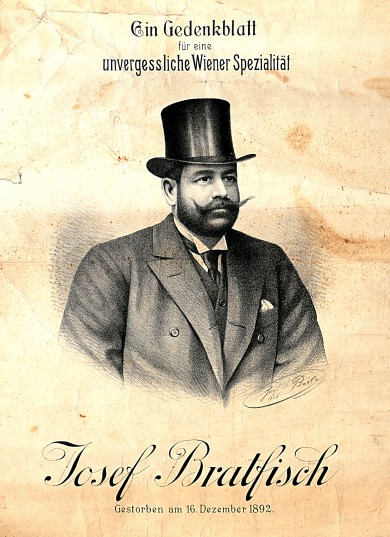
They not only transported people, but also messages, luggage, and goods. At the same time, the horse-drawn carriages — the so-called horse-drawn carriages — became well-known figures in Vienna's cityscape. Her appearance, language and humor had a lasting impact on the image of the “typical Viennese”.
Horse-drawn carriage as a cultural symbol of Vienna
Above all, during the time of the Danube Monarchy, the Viennese horse-drawn carriages developed their own driving style, special tensions, methods for training horses suitable for everyday use and much more — all of this quickly made them known across the borders of Austria-Hungary. Today, there are mostly only two driving lessons left in Europe — driving to Achenbach and the Viennese-Hungarian driving lesson.
Over time, the Viennese horse-drawn carriages became much more than just a means of transport. They found their way into literature, music and the visual arts. Songs, operettas and stories took up the image of the horse-drawn carriage as a charming, sometimes grumpy, but always cordial city guide.
Especially in the 19th century, at the time of Viennese Classicism and later Viennese Modernism, horse-drawn carriages were regarded as a symbol of comfort and joie de vivre and were often celebrated as “horse whisperers” or virtuosos of carriage driving who embodied the special rhythm of the city.
The change in the 20th century
With the introduction of modern means of transport such as trams, automobiles and subways, horse-drawn carriages lost their original function in everyday traffic. Yet they did not disappear from the cityscape. Instead, their role increasingly turned into a tourist and representative function.
In the 20th century, horse-drawn carriage rides became a popular way for visitors to Vienna to explore the historic city center. At the same time, legal regulations were created which clearly defined the operation, the training of coachmen and the use of horses.

The Viennese horse-drawn carriages today
Today, Viennese horse-drawn carriages are a protected part of urban culture and closely linked to the historic center of Vienna. Modern horse-drawn carriage companies combine tradition with contemporary standards, organizational professionalism and clear framework conditions.
The focus is on:
- decelerating cultural history
- Preserving the historic horse-drawn carriage tradition and its carriages, which are often well over 100 years old
- the quality of the tourist offer
- the responsible coexistence between horses and humans in the 21st century
Today, horse-drawn carriages symbolize the respectful treatment of the history of horses and people, as well as for Vienna's ability to actively develop traditions.
Conclusion: A living tradition with centuries of history
The story of Vienna horse-drawn carriages is the history of Vienna itself — shaped by change, cultural diversity and consistency. From a practical means of transport to a social status symbol to today's cultural heritage, the horse-drawn carriages have witnessed every era in the city.
“The horse-drawn carriages are to Vienna what the gondolas are to Venice”
Quote: Unknown
Even today, they are an unmistakable part of Vienna's cityscape and combine past and present in a unique way — rolling, slowing down and deeply rooted in the history of the city.